Is incense bad for you? Is incense smoke a risk for your lungs or general health? If you just started to dive in the world of incense, you surely have heard some people having concerns about the safety of burning incense and how can this impact your overall well-being. But is there any truth in those claims? What is the science behind it? Or is it just hear saying? Well, in this article we will address this important issue once and for all so you can have peace of mind!

Most mass-produced incense is not actually made of fragrant wood. Usually, it is just a bamboo core or wood dust coated in synthetic fragrance oils and chemical dyes. When you burn these, you aren’t just smelling incense; you are breathing in whatever those chemicals leave behind. This is where incense gets its bad reputation, and in this case, the concerns are valid.
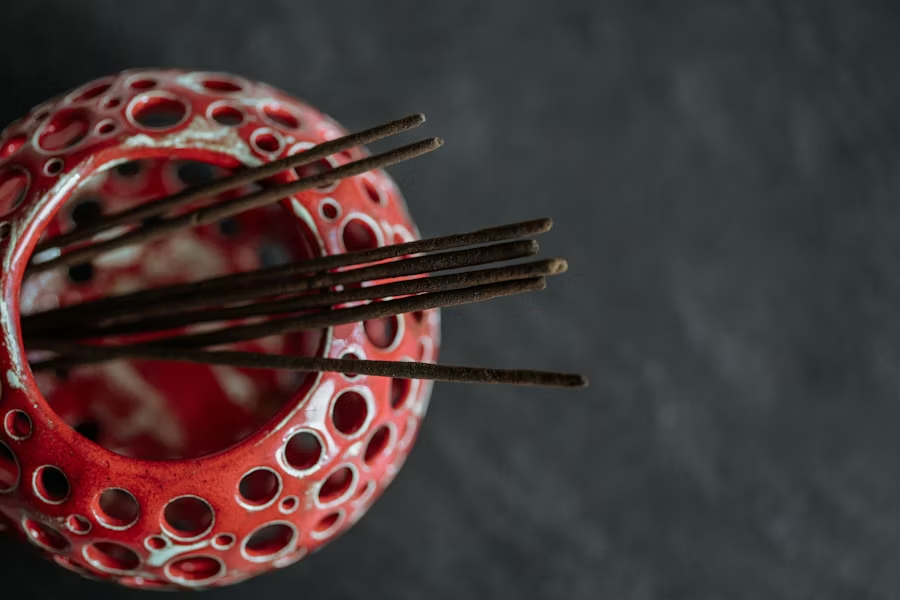
Many of these sticks start as a plain bamboo skewer covered in a bland wood dust and a binder. Since that base does not really have a scent, manufacturers spray it with synthetic oils to create a smell and use dyes to make it look a certain color. Neither of those things is particularly good for your lungs when they burn.
Most incense sticks get their smell from synthetic fragrance oils that are sprayed or dipped onto the sticks after they are made. Some brands also add dyes just to make the product look better on a store shelf. The issue is that burning these materials and breathing them in isn’t healthy for your lungs.
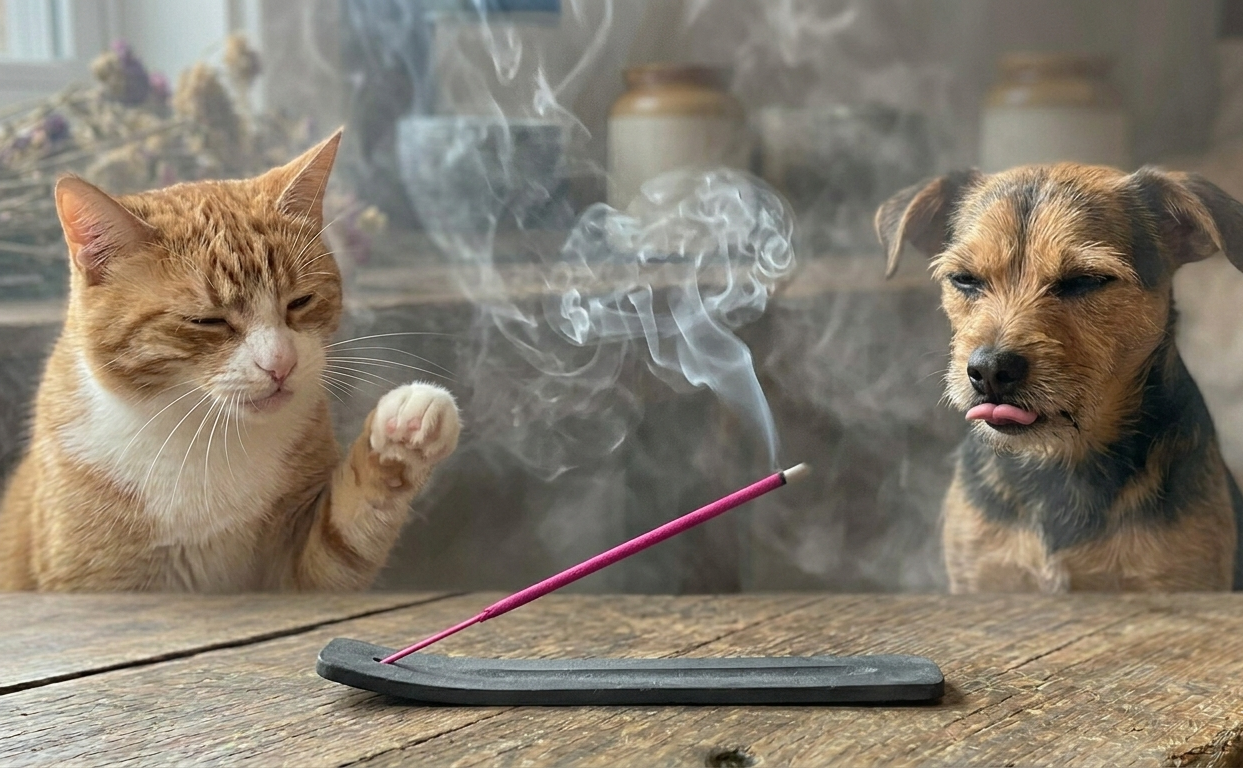
This is especially important if you have pets. Cats and dogs have much more sensitive respiratory systems than humans do, and they cannot always choose to leave the room if a scent is too strong. Synthetic smoke is more likely to irritate their air ways, and some chemicals in these fragrances can even be toxic to cats. If you have pets, it is best to use real wood incense, keep the sessions short, and make sure the room is well-ventilated.
Then, how harmful is incense smoke? Is it worse than tobacco smoke? The truth is, as many scientific studies have shown, that inhaling a lot of any type of smoke in general for long and frequent periods of times is bad for your health. Period.
In this sense, there are a lot of people talking about specific quantities and health risks of tobacco smoke, industry or factory smoke, etc. However, when it comes to incense there is no specific guideline or study that describes how much is “a lot” of incense smoke so this can be considered a risk or health hazard. But there is consensus in a set of best practices and moderate use to minimize the potential risks of incense smoke.
Some people get an instant headache around incense, and it’s not always about whether it’s natural or synthetic, sometimes it’s just about how much is burning in too small a space. Even good, wood-based incense can feel like a lot in a closed bathroom or a tiny apartment with the windows is closed. If that’s you, try one stick instead of three, a bigger room, and a door left open rather than closed. If you are sensitive to scents, try burning just one stick in a larger room with better airflow. Often, the issue is more about ventilation than the incense itself.
Natural, wood-based incense, on the other hand, burns very differently, because the aromatic compounds come from the wood’s own natural oils rather than an oil added on top of it afterward.

Hinoki and sugi are two of the most well known woods in Japan. Both of them have a natural scent that comes directly from their own resin, so there is never any fragrance oil added. Hinoki has a bright, slightly citrusy smell that most people recognize from traditional Japanese bath houses. Sugi is a bit deeper and smells a little smokier, like being in a quiet cedar grove. One of the best things about this wood is where it comes from. The incense is made using reclaimed offcuts, which are just leftover pieces from Japanese woodworking and construction that would usually be tossed out. This means no new trees are cut down just to make the incense. You get the real scent of the forest without any new trees being touched.
Sandalwood has been used to make incense for thousands of years, and it is pretty obvious why once you actually smell it. The scent is deep and warm without needing any artificial additives because the wood itself does all the work. Unlike many modern scents that rely on synthetic boosters to stay strong, sandalwood gets its richness from its own natural oils. This is why it has remained a staple in temples and homes for so long. It also burns slower than lighter woods like hinoki, so the fragrance fills a room gradually instead of all at once. It is a great choice if you want a scent that lasts a long time without ever feeling too strong.

If you have been worried about the safety of incense, the easiest solution is to switch to sticks made from real, reclaimed wood. Using something made from natural Hinoki or Sugi with no synthetic additives can make a big difference in how comfortable you feel using it in your home.